Image (CC) by Rufus Walabee – One night in Moscow
Key values in your Russian business meeting
Russia is a country of cultural contradictions. Not only is it a very big country, covering nine time zones, the upheavals of the 1990s have created a very pronounced generational gap. Generally, the older generations are marked by a tendency towards conservatism and have a group mentality. The younger generations are much more dynamic and progressive, with a more individualist approach.
There is a general sense of pessimism not only about the future but also about the present as well. Russia is a country that considers itself isolated from the rest of the world, surrounded by neighbours who want to take advantage of it. This has created a fortress mentality – outsiders are not trusted. This is in contrast to the extensive hospitality normally shown to visitors.
Russians are often very closed and formal in public, but open, warm and informal in private. In communication, Russians tend to be direct and do not avoid confrontation. They can be extremely emotional and yet reserved in the same meeting.
Russians generally consider themselves to be culturally rich in terms of art and literature. Dusha (soul) is an important consideration – this means that intellectual, abstract discussions are common. Knowledge of “high culture” is valued, and the ability to talk about works of art and literature is appreciated.
Russia is a meeting of Europe and Asia, and their cultural portrait reflects this.
Time, ‘before and after’ your business meeting

Image (CC) by Aleksander Markin – Russia State Transport Company Ilyushin Il-96-300PU RA-96016
Russians are traditionally very punctual, especially when meeting foreigners. This is beginning to change, especially among senior directors in new businesses who like to demonstrate their power by keeping visitors waiting. For a meeting of equals expect punctuality: meetings will start on time but will continue until all points are covered.
If you have meetings with local officials you will wait a long time, even if you have an appointment: processes are slow so it may not be a deliberate ploy. You should expect meetings to take up more of your time than planned.
Before a meeting you should re-confirm by phone, both with the person and with his/her secretary. Russians prefer direct contact to emails or letters – the postal service is famously unreliable, so make sure you speak in person. Russians do not generally adhere to formal agendas, as the most senior person will dictate the topics and length of discussions. It is worth clarifying who will be present in advance if possible and ensuring that your party contains people of equivalent status. This will increase the chances of you being able to influence the meeting.
When you are considered an “honoured guest” it is very common to combine meetings with food and drink. Russians can be very hospitable and are keen to demonstrate their generosity. They are aware of their reputation for heavy drinking and may use that to gain advantage.

Image (CC) by marsmettt tallahassee
“Banquets” can last late into the night – you should expect to stay late as well. It is worth noting that the next day will start at the usual time, regardless of when the banquet finished.
Hierarchy and status in a business meeting
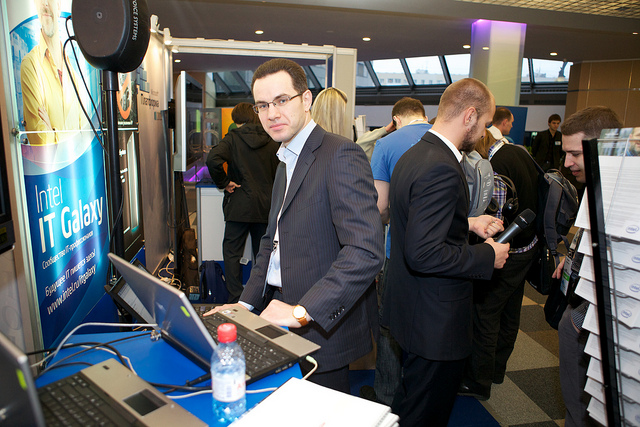
Ironically the ideologically egalitarian policies of communism have bred an extremely hierarchical structure in private and public organisations in Russia.
The boss is a very distant, powerful figure, and is surrounded by visible demonstrations of his/her position. Wealth and status are demonstrated openly and emphasise the difference in authority. Promotions are rewarded not just financially but with a bigger office, better car and other visible privileges. Junior team members are expected to respond immediately to any request by their boss, regardless of any other duties they may have to perform.
It is also expected that those in authority will be obvious in their exercise of power. Russian managers are comfortable criticising openly and making impulsive decisions. In the same way, rewards and positive feedback are given publicly. This can mean that the boss may use a meeting as an opportunity to address an individual’s performance. This is uncommon when outsiders are present, but not unheard of.
Decisions, discussions and disagreeing
As is expected in hierarchical societies, decisions are usually made at the most senior level. The boss is advised by heads of department, but will make the final decision alone, although s/he may not heed the advice given. Decision-making can therefore take a long time as each “boss” at each stage will decide whether or not to pass the recommendation up to the next level.
Individuals may be invited to contribute to decisions, but these are not discussions or debates. In meetings which involve negotiations, Russians will often withdraw from the meeting to consult, allowing the senior person to make the decision alone. Disagreement with a senior person is very rarely expressed in public.
It is not uncommon for the senior person to be quite confrontational in a meeting if s/he is not getting their own way. It is appropriate to ask for a break to reconsider your position before continuing the meeting.
Task vs. Relationship
Russians consider both relationship and task to be important. They traditionally have extensive networks and rely on mutual influence to bypass bureaucracy. They are more comfortable doing business with people they know well. However, business relationships are measured by the success of a task – the relationship may not survive a bad experience or a failure.
Loyalty is to a person rather than an organisation and you must re-establish a relationship each time your contact moves on. When a team leader is promoted, it is common for him/her to promote members of the old team as a reward for their support.
Among younger leaders and businesses the balance is tending towards a greater focus on task, and business relationships are increasingly transactional. When making proposals it may be beneficial to demonstrate the ways this will improve a person’s standing in their organisation and how they will benefit individually.
Key values
- Emotional
- Fatalistic
- Pessimistic
- Inward facing
- Fortress mentality
- Direct
- Dusha (soul)
Time, “before and after”
- Punctuality valued
- New businesses and bureaucrats may keep you waiting longer
- Business entertainment can be very long
- Meetings continue to a decision
Hierarchy and status
- Steep hierarchy
- Visible demonstrations of status
- Power is emphasised and used
Structure and formality
- Meetings are always formal
- Structure of meetings is dependent on the host/senior person present
- Communication is formal at meetings, even if less formal before and after
- Use professional/academic titles and surname or name and patronymic
Decisions, discussions and disagreeing
- Decisions made by boss alone
- Discussions done in private not at meetings
- Disagreeing with the senior person is done in private if at all
Task vs. relationship
- Relationships and “blat’” (network) are crucial
- Loyalty to a person rather than organisation
- Task is still very important – Russians want actions
This blog post is written by Declan Mulkeen is Marketing Director at Communicaid a culture and business communication skills consultancy which offers cultural awareness training.